
At Baseside Dental Office in Fussa, Tokyo, we fabricate custom-fit night guards for patients who grind or clench their teeth during sleep — a condition known as bruxism. A night guard is a protective appliance worn over the teeth at night that absorbs and redistributes the forces of grinding and clenching, reducing the damage those forces cause to the teeth, restorations, and jaw joints over time.
We provide custom-fabricated night guards only — made using a digital impression from our intraoral scanner. We do not recommend over-the-counter guards, and we will explain why at your consultation.
Table of Contents
What Makes Our Night Guard Different
Custom Fabrication — No Off-the-Shelf Appliances
Over-the-counter mouth guards are designed to fit a generic arch form. They rarely achieve the close adaptation needed to function properly as a protective appliance, and their imprecise fit can place uneven forces on the teeth and joints — sometimes making things worse rather than better.
A custom night guard is fabricated from a precise model of your specific dentition. It fits accurately, stays in place during sleep, and distributes occlusal forces evenly across the arch. For patients with bruxism, this difference in fit translates directly into a difference in protection.
Hard Resin Construction
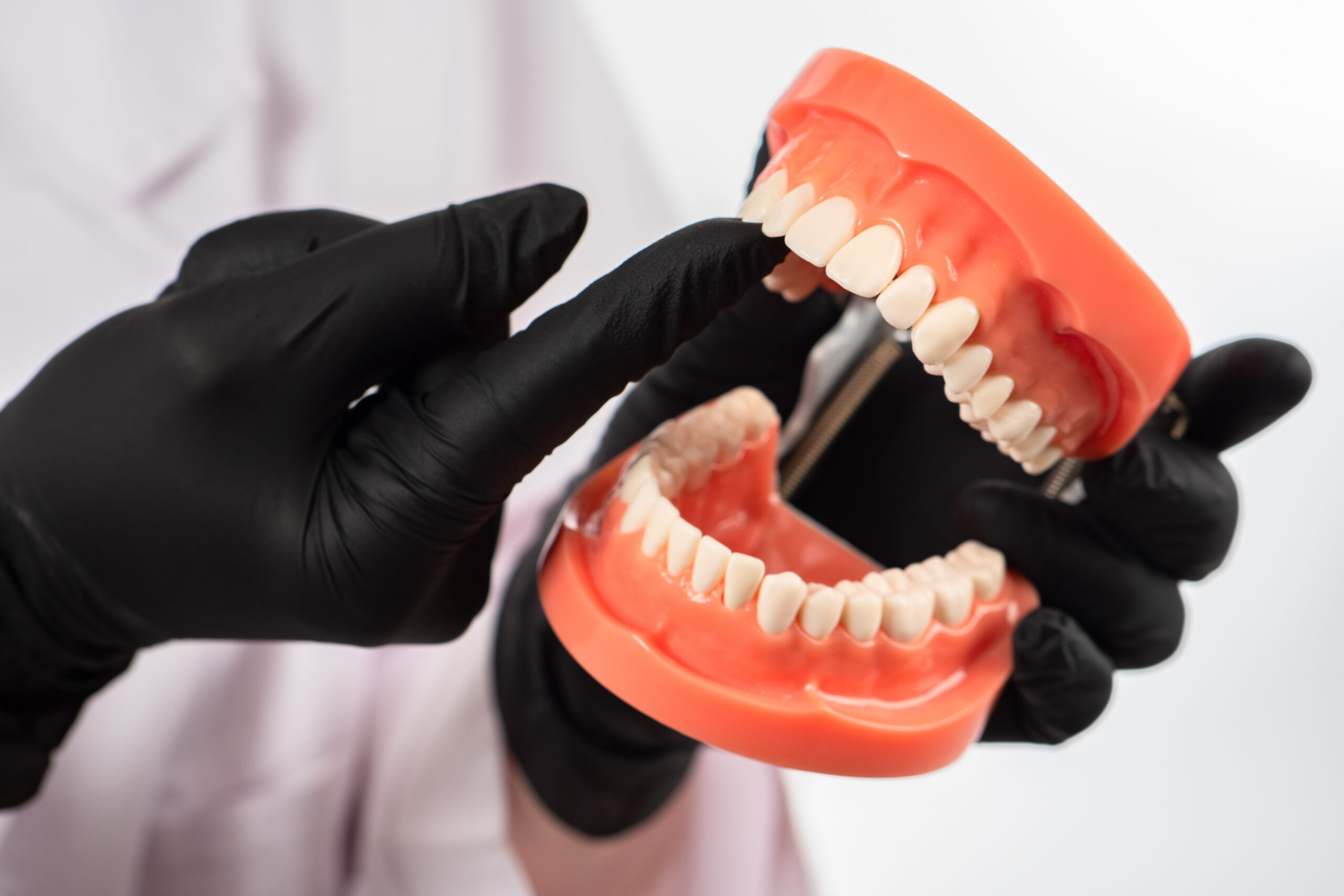
Our night guards are fabricated from hard acrylic resin. The hardness of the material is an important consideration in night guard design: a hard surface allows the opposing teeth to slide smoothly across the guard during parafunctional movements, reducing lateral forces on individual teeth. Soft guards — while comfortable — can sometimes encourage more active clenching rather than reducing it; but are available if in temporary use.
The thickness and coverage design of the guard are determined based on your occlusal anatomy and the severity of your bruxism.
Occlusal Evaluation When Indicated
A night guard protects your teeth, but it does not address the underlying forces driving bruxism — and it does not correct a bite discrepancy if one exists. For patients with significant tooth wear, repeatedly failing restorations, or symptoms of TMJ disorder, we may recommend a deprogrammer evaluation alongside or before fabricating a night guard.
Understanding whether there is an underlying occlusal problem allows us to provide more comprehensive care — rather than simply placing a guard over a situation that may have a more specific cause.
Signs You May Need a Night Guard
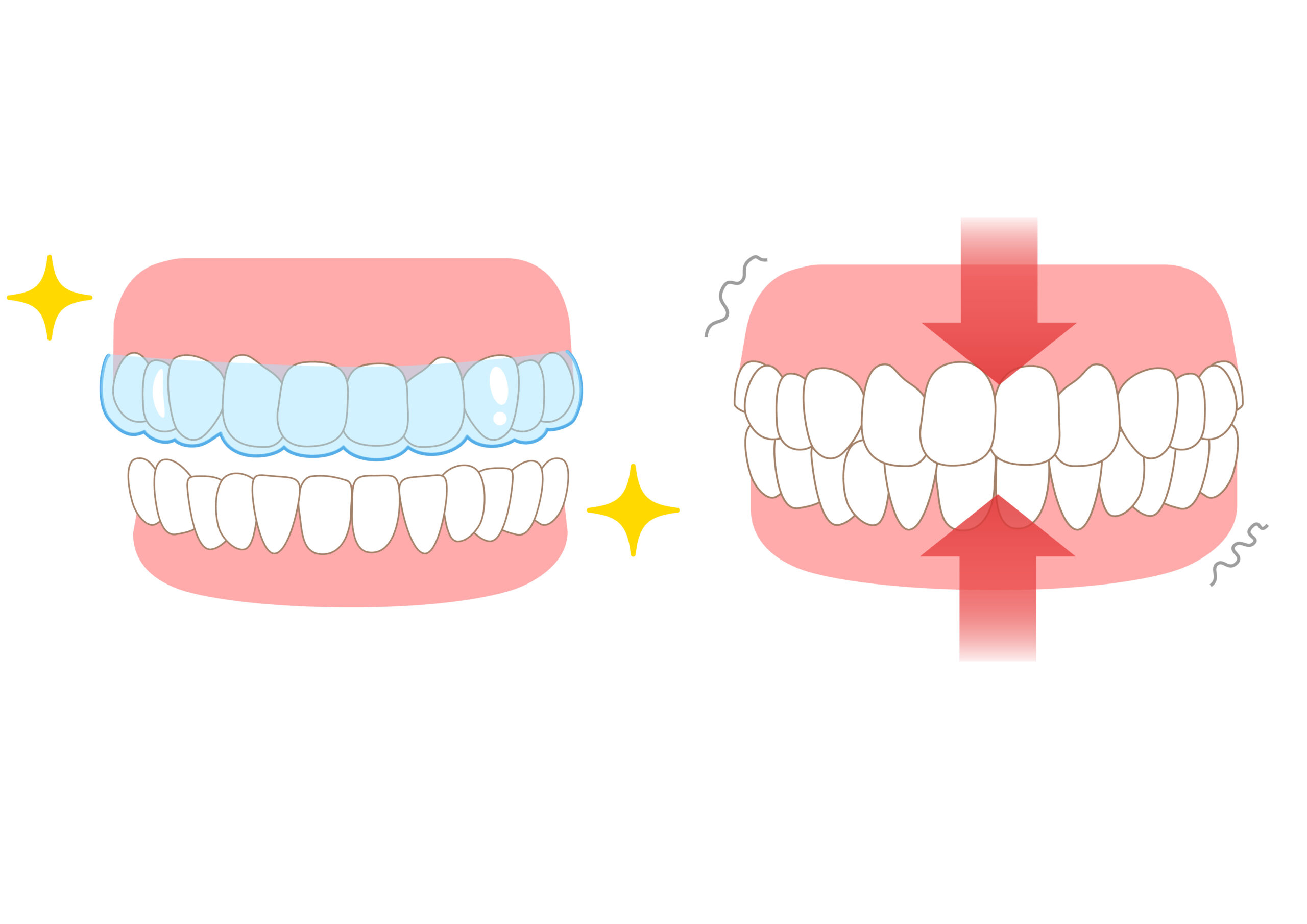
You may be a candidate for a night guard if you experience any of the following:
- A partner or family member has noticed grinding sounds during your sleep
- You wake with jaw soreness, tightness, or headaches — particularly in the temples
- Your teeth appear worn, flattened, or shorter than they used to be
- Fillings, crowns, or other restorations chip or fracture more frequently than expected
- You have a clicking, popping, or uncomfortable jaw joint
- Your dentist has noted wear facets or signs of parafunction at a routine check-up
Bruxism often goes unnoticed because it occurs during sleep. Patients may have been grinding for years before clinical signs become apparent. If you have any of the above, please mention it at your appointment.
For patients who have also undergone airway screening and show signs of airway narrowing, a night guard may be considered as part of a broader approach to managing nighttime oral function.
Night Guard vs. Deprogrammer — What’s the Difference?
| Night Guard | Deprogrammer | |
| Purpose | Protect teeth and joints from bruxism forces | Evaluate jaw joint position and bite relationship |
| Duration of use | Ongoing — worn nightly indefinitely | Short-term — typically four weeks for diagnostic purposes |
| Clinical role | Protective appliance | Diagnostic device |
The two appliances look similar but serve entirely different functions. Some patients may need both at different stages of their care — a deprogrammer to evaluate the occlusion, followed by a night guard to provide long-term protection. We’ll discuss what makes sense for your situation.
Risks & What to Expect
Night guards are consumable items. Depending on the severity of bruxism, a guard may show significant wear within months to a few years. We check the condition of your night guard at every recall appointment and will let you know when it needs to be replaced.
A night guard reduces the damage caused by bruxism — it does not stop bruxism from occurring. The underlying drivers of grinding and clenching (stress, occlusal instability, airway issues, sleep architecture) are separate considerations, and we are happy to discuss them.
Frequently Asked Questions
How quickly can a night guard be made?
After the impression is taken, fabrication typically takes one to two weeks. We’ll contact you when it’s ready for delivery.
Do I need to wear it every night?
Yes. Consistent nightly wear is what provides consistent protection. Wearing a night guard occasionally will not meaningfully reduce the cumulative effects of bruxism over time.
Will a night guard stop my grinding?
No. A night guard protects your teeth and joints from the forces of grinding and clenching — it does not eliminate the behavior itself. For patients who want to explore the underlying contributors to their bruxism, we are happy to have that conversation.
How do I clean my night guard?
Rinse it with cool water and brush it gently with a soft toothbrush — without toothpaste, which can be abrasive. Do not use hot water, as it can distort the acrylic. We provide written care instructions at your delivery appointment.
Why not just use an over-the-counter guard?
Generic mouth guards are designed for average arch dimensions and rarely fit precisely. Poor fit can cause uneven biting forces and, in some cases, may increase clenching activity. For effective protection, a custom-fabricated appliance is the appropriate clinical choice.